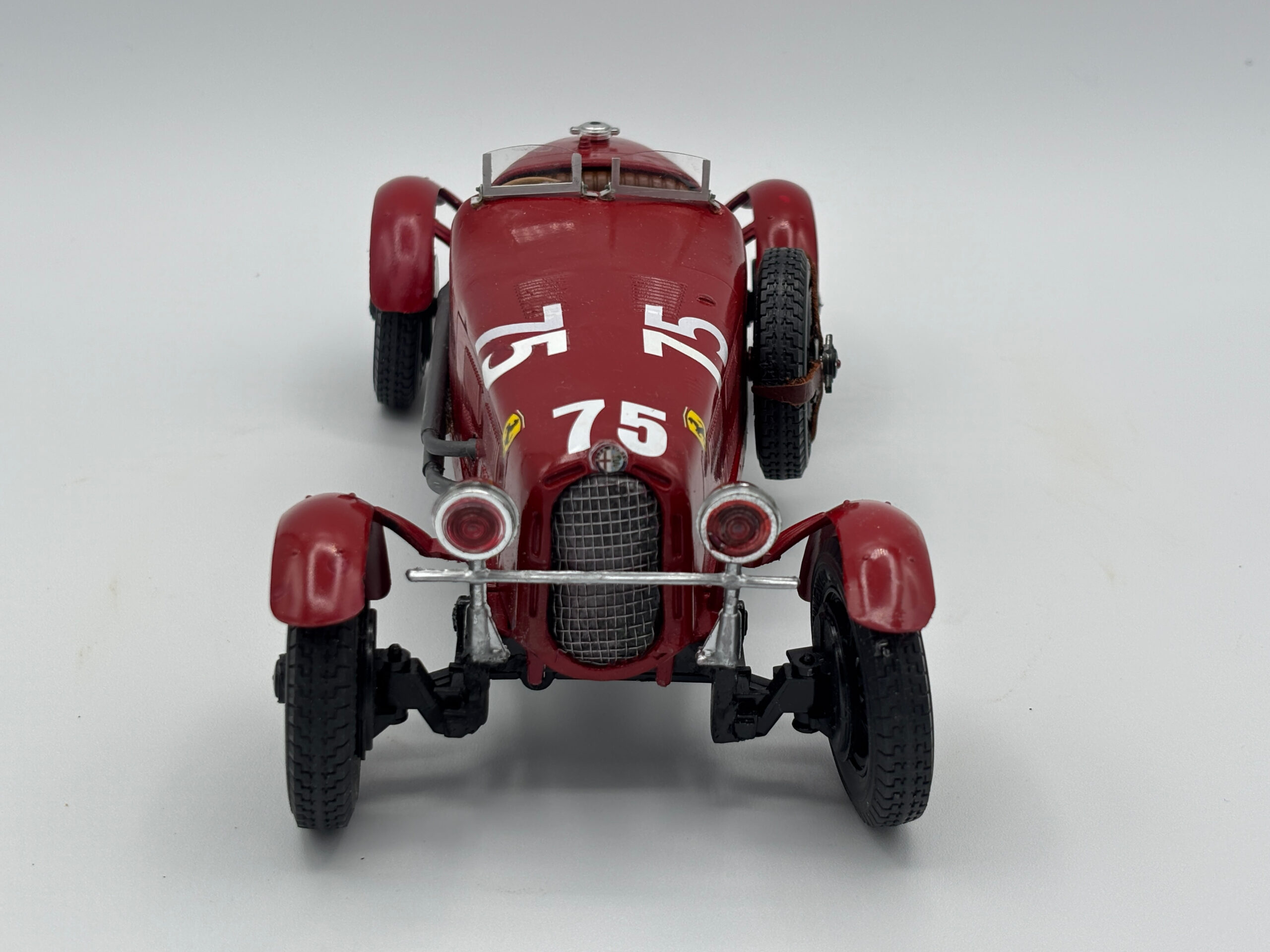
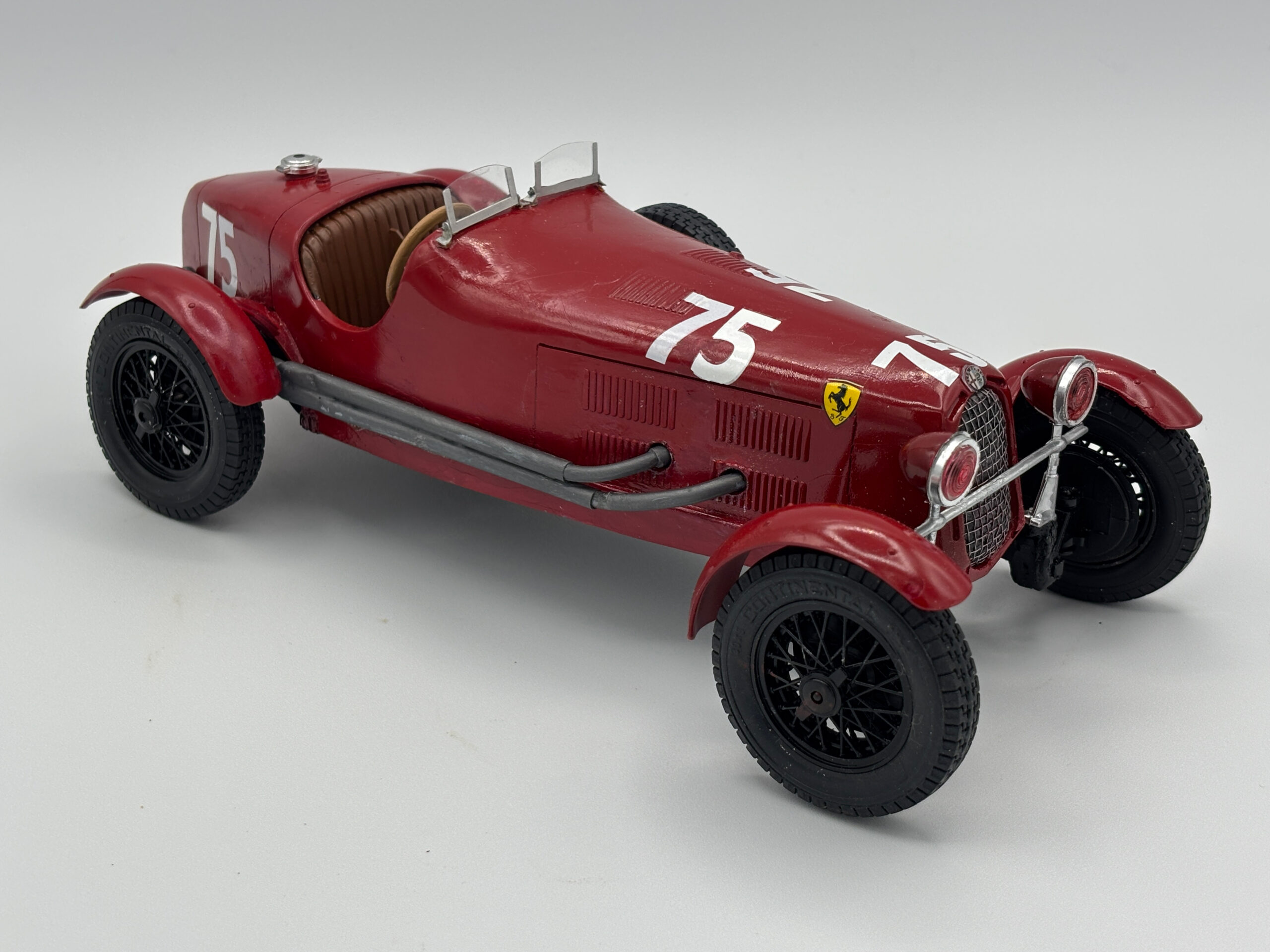
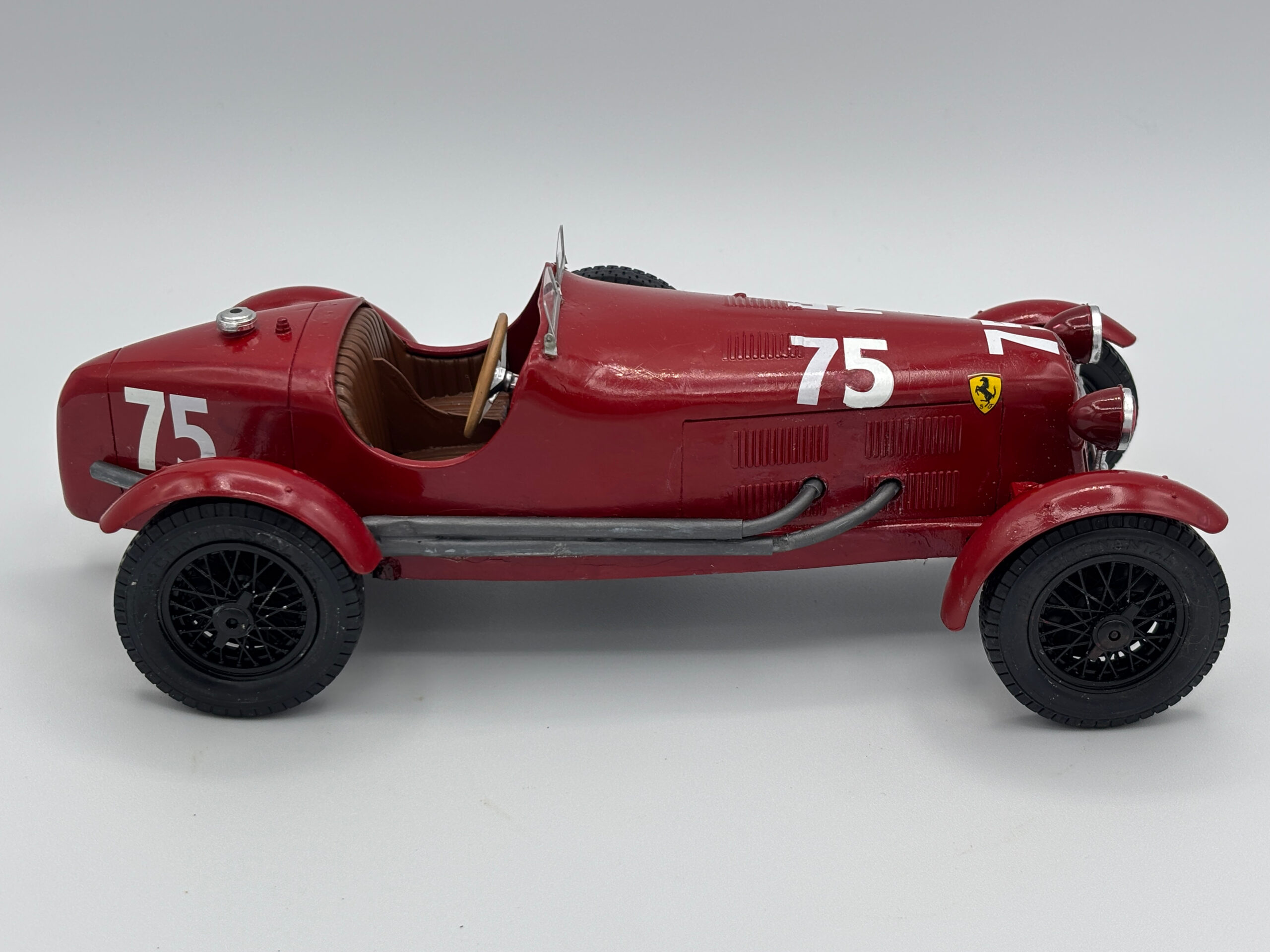
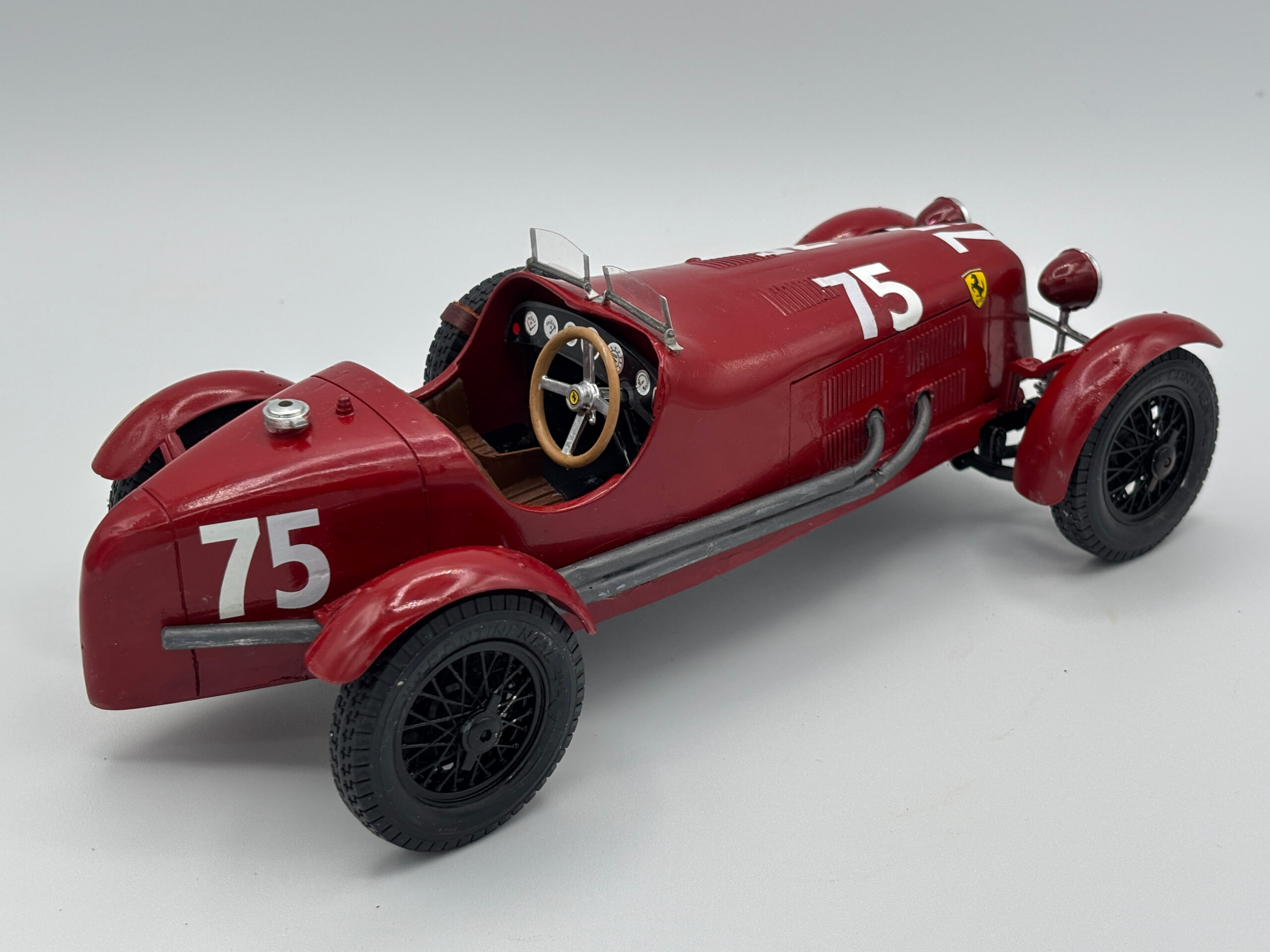
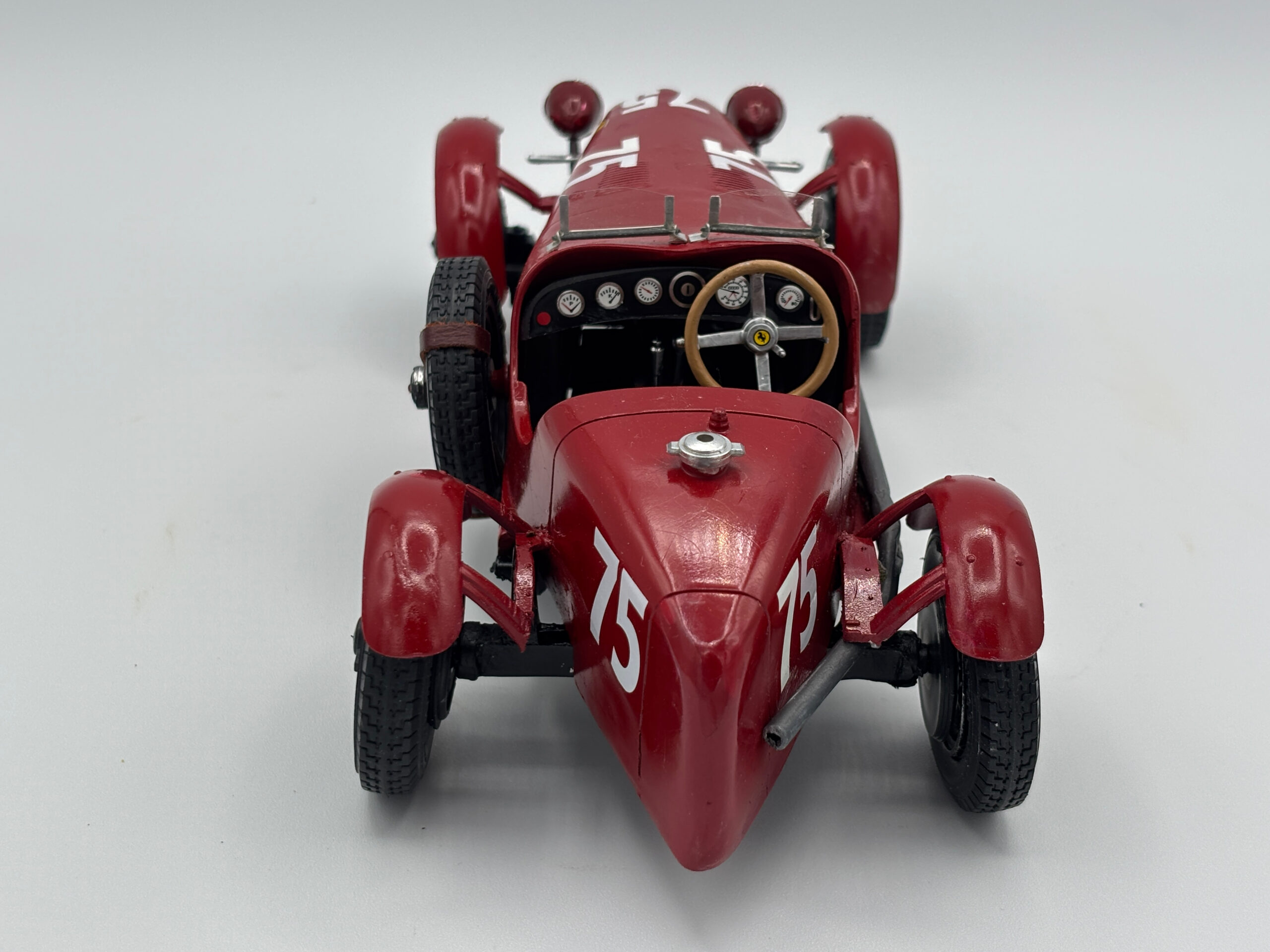
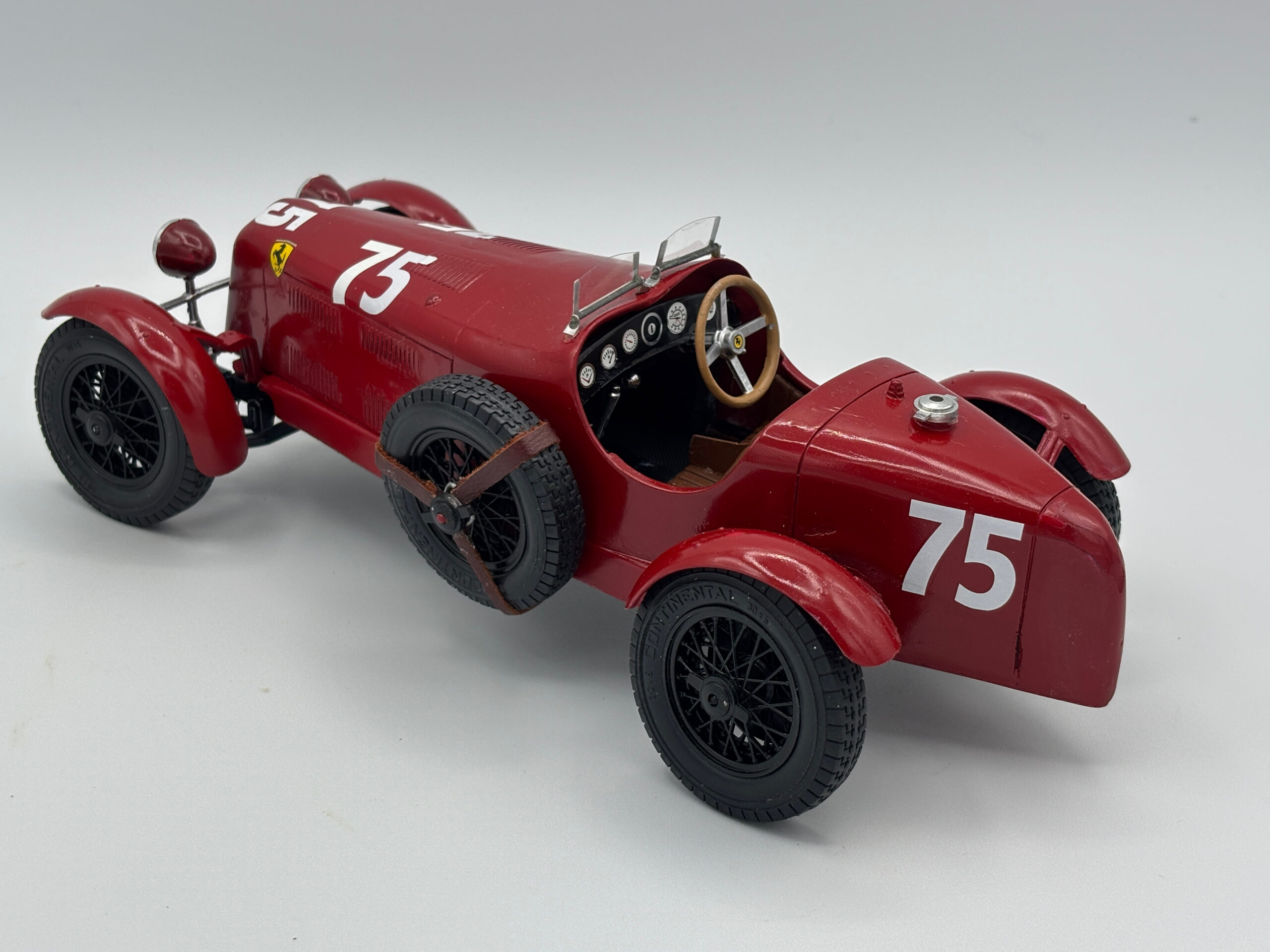
STORY OF THE DAY: The 2900A Begins with Victory
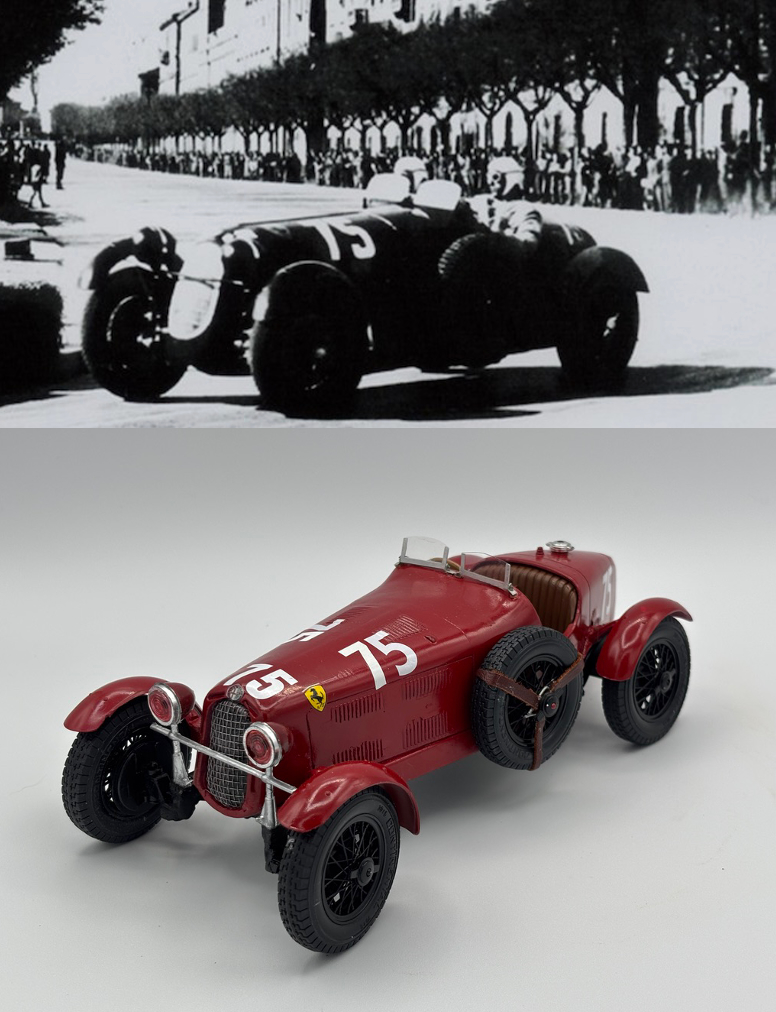
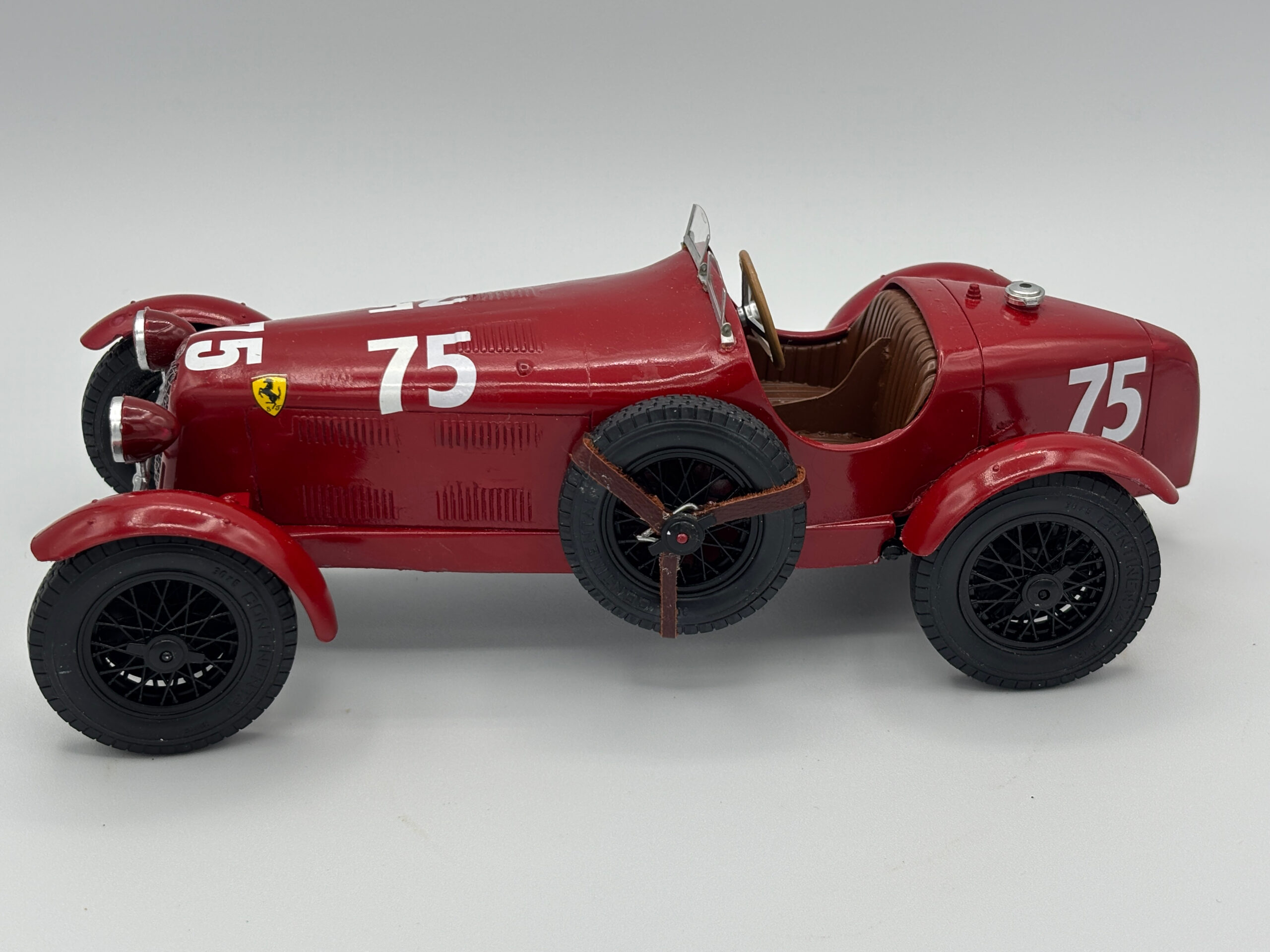
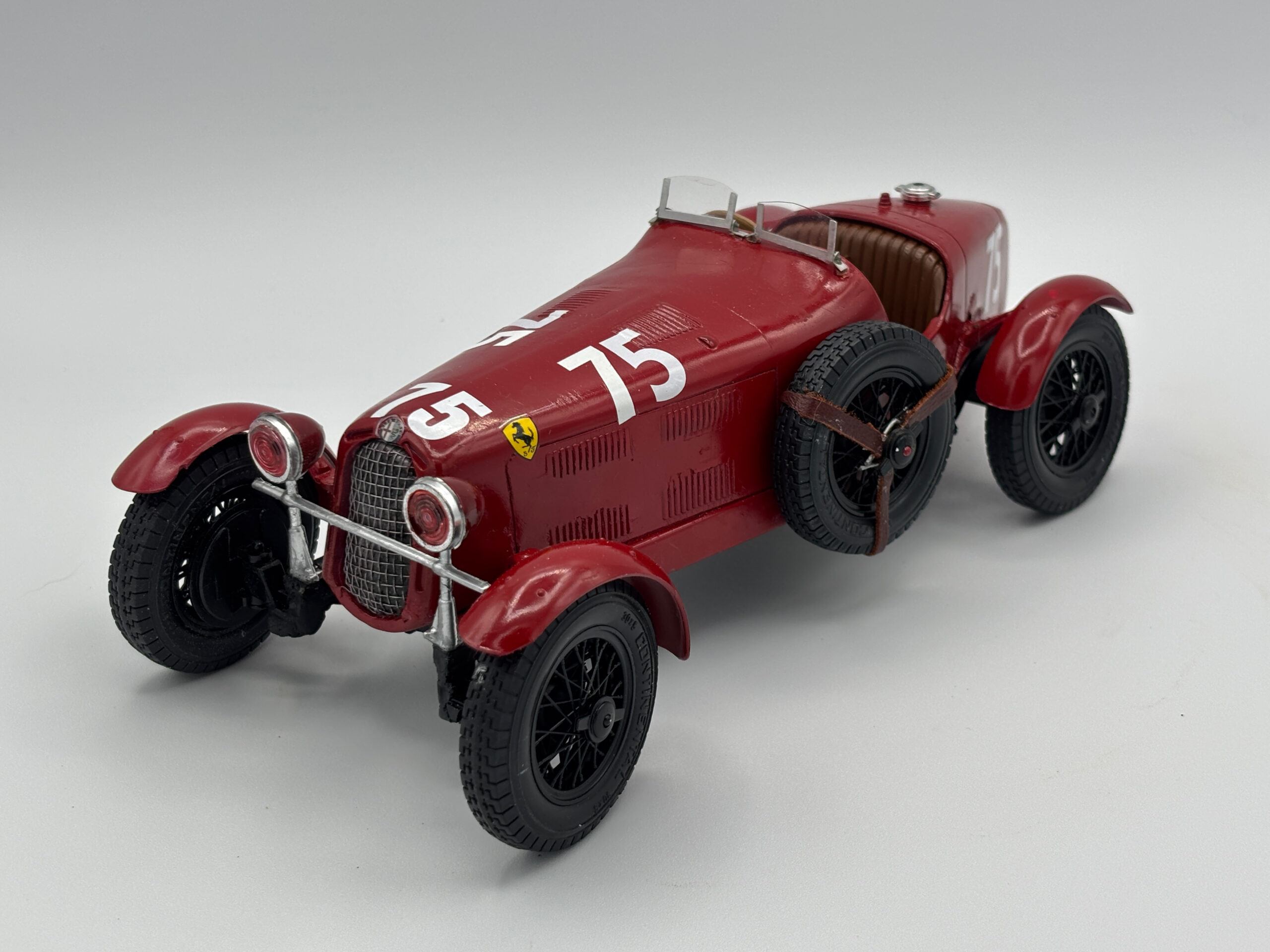
Antonio Brivio and Carlo Ongaro won the 1936 Mille Miglia in the number 75 Scuderia Ferrari Alfa Romeo 8C 2900A. The race was run in early May over approximately 1,597 kilometres, which they completed in 13 hours 7 minutes 51 seconds at an average of 121.622 km/h. Their success headed an Alfa Romeo sweep of the first three positions and gave the new 2900A an emphatic road-racing debut.
Brivio and Ongaro’s pace represented a major advance: their average was substantially higher than that of the previous year’s winner. The open two-seater, nicknamed Botticella for its rounded body, combined Grand Prix-derived performance with the equipment needed for the public-road course. The crew maintained that speed through towns, mountains and night running without sacrificing reliability.
The 8C 2900A developed the P3’s supercharged straight-eight concept into an advanced sports-racing car. Its 2.9-litre twin-overhead-camshaft engine used two superchargers, while independent suspension replaced the rigid-axle arrangement of earlier Alfa sports cars. A light open body and powerful brakes gave it the speed, traction and control required to exploit the Mille Miglia’s fastest sections.
Antonio Brivio was an Italian bobsleigh competitor and racing driver who became one of Scuderia Ferrari’s leading sports-car performers, with major victories at Spa and the Targa Florio. Carlo Ongaro was an Italian co-driver whose role involved navigation, observation and mechanical support throughout the race. Brivio’s established speed and Ongaro’s assistance allowed the technologically ambitious 2900A to fulfil its promise immediately.
| Brand | Burago |
| FPR # | M |